Parenting
The First Home... Where the Making of a Human Being Begins
July 15, 2026 · 4 min read
By: الأكاديمية
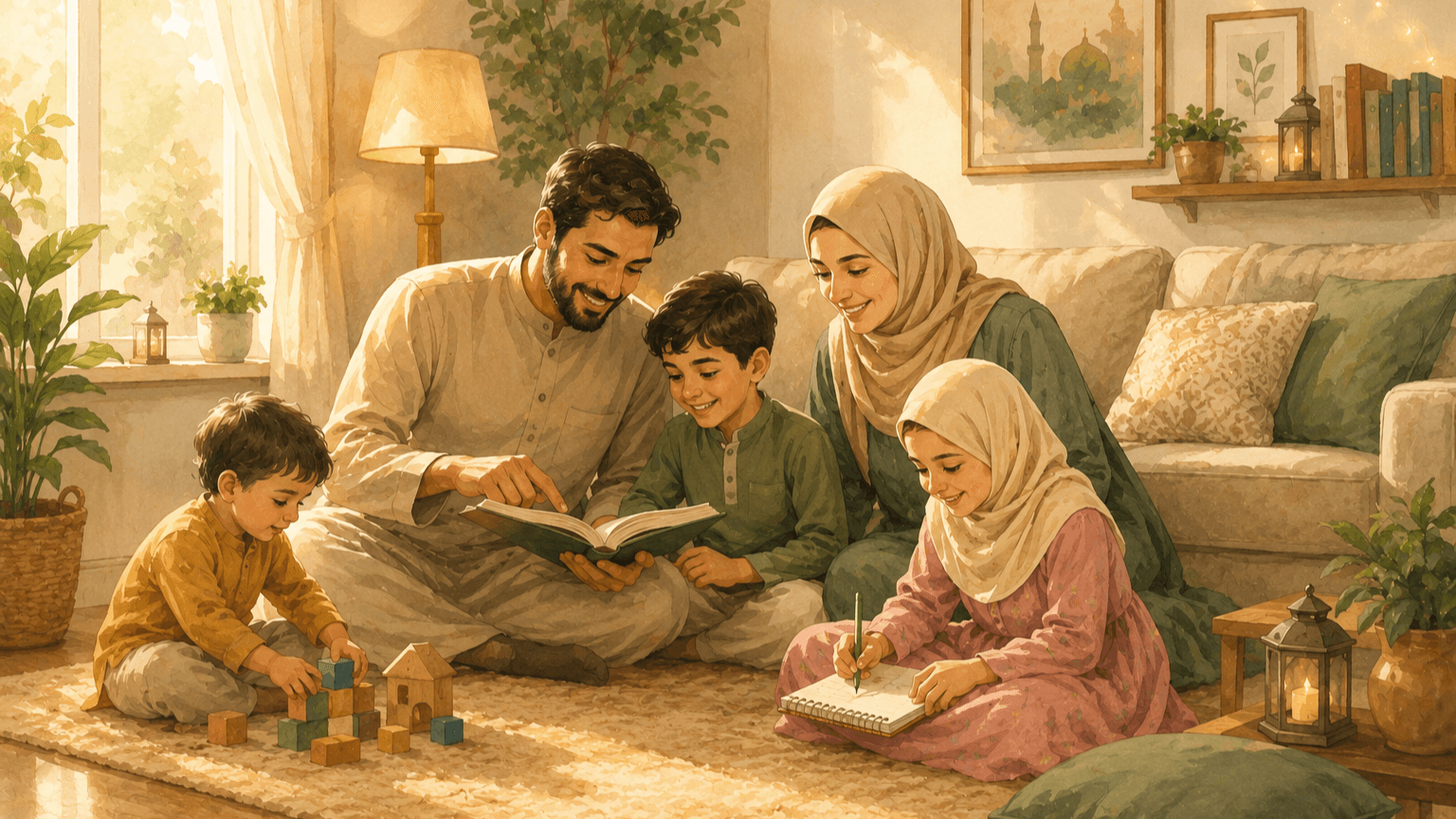
The family is the first school in which a child receives life's lessons before he even learns to read and write. It is the environment in which his character is formed, his values become firmly established, and through which he learns the meaning of love, responsibility, and discipline. Islam gave great attention to the role of parents, because the soundness of children usually begins with sound Tarbiyah, and the more aware parents are of their mission, the greater the chances of raising a righteous and balanced generation.
The family as the first educational environment in a person's life
Practical example and its effect on shaping behaviour
Raising children with love and mercy and its psychological effect
Dialogue and listening, and building trust with children
Instilling Iman and values before information
Developing responsibility and independence from an early age
Balancing firmness and gentleness in Tarbiyah
Supplicating for children and linking Tarbiyah to seeking Allah's help
Good Example Is the Foundation of Tarbiyah
Scholars of Islamic education hold that the greatest means of Tarbiyah is not an abundance of commands or punishments, but practical example. A child observes his parents' behaviour far more than he listens to their advice, and so a parent's commitment to honesty, trustworthiness, respect for others, and maintaining Salah is naturally reflected in the character of the children.
For this reason, the Noble Qur'an says:
﴿يَا أَيُّهَا الَّذِينَ آمَنُوا لِمَ تَقُولُونَ مَا لَا تَفْعَلُونَ﴾ [الصف: 2].
Consistency between word and deed gives parents credibility and makes their advice far more effective.
Raising Children with Love and Mercy
Islamic Tarbiyah is not built on constant intimidation, but on balancing firmness with mercy. A child who feels secure within his family is more receptive to guidance, more confident in himself, and better able to face the pressures of life.
The Prophet ﷺ was an example of mercy toward children, playing with them, embracing them, and making them feel valued, showing that love is not a secondary matter in Tarbiyah, but one of its most important means.
Instilling Responsibility from an Early Age
It is a mistake for a child to grow up depending on others for everything, because bearing responsibility begins with simple tasks suited to his age, such as tidying his belongings, taking care of his things, and participating in some household chores.
Developing a sense of responsibility helps children become self-reliant, bear the consequences of their decisions, and form a mature character capable of facing future challenges.
Dialogue and Building Trust
Calm dialogue opens hearts before it opens minds, and makes children more willing to express their problems and thoughts. Relying solely on commands and constant criticism, on the other hand, often leads to weakened communication and a widening gap between parents and children.
Listening well and respecting children's feelings does not mean agreeing with all their opinions; rather, it means treating them with respect that helps them accept guidance.
Raising Children on Values Before Achievements
Many families focus more on academic achievement than on character, while Islamic Tarbiyah affirms that building the human being takes precedence over building knowledge. Honesty, trustworthiness, chastity, kindness, and respect for others are values that stay with a person throughout his life, while knowledge and skills may change over time.
For this reason, the Prophet ﷺ said: "I was only sent to perfect good character." (Reported by Ahmad, 8939; Sahih Al-Jami', 2833)
The true success of children, then, is not measured by academic certificates alone, but by their character and behaviour.
Supplicating for One's Children
One of the greatest expressions of Tarbiyah is for parents to frequently supplicate for their children's guidance and righteousness, following the example of the supplication of the servants of Ar-Rahman:
﴿رَبَّنَا هَبْ لَنَا مِنْ أَزْوَاجِنَا وَذُرِّيَّاتِنَا قُرَّةَ أَعْيُنٍ وَاجْعَلْنَا لِلْمُتَّقِينَ إِمَامًا﴾
[الفرقان: 74].
Dua expresses the heart's attachment to Allah, alongside taking all the possible educational means.
A family that raises its children upon good example, mercy, dialogue, responsibility, and Iman-based values lays a solid foundation for stable characters who are beneficial to society. Tarbiyah is not a temporary task, but an ongoing mission, and its effects extend across successive generations. For this reason, the success of parents in fulfilling this mission is among the greatest causes of children's righteousness and society's soundness.