Parenting
The Importance of Sacred Symbols in the Life of a Muslim
July 15, 2026 · 7 min read
By: الأكاديمية
Allah, the Exalted, established sacred symbols in Islam that He honoured, and commanded Muslims to revere and respect them, linking this reverence to the piety of the heart. In the eyes of a Muslim, these sacred symbols are not merely historical sites or religious icons; they are rites that Allah chose and ennobled, and revering them has become an act of worship through which the servant draws closer to his Lord.
The verses of the Noble Qur'an and the Hadiths of the Prophet ﷺ indicate that reverence for sacred symbols is evidence of strong Iman, and that belittling them or falling short in respecting them indicates weakness in one's reverence for Allah within the heart.
Reverence for sacred symbols as an expression of the piety of hearts
The status of sacred symbols in Islam (mosques, the Ka'bah, and the Noble Qur'an)
Reverence for sacred symbols in the guidance of the Prophet ﷺ
Legitimate reverence without excess
The effect of revering sacred symbols on a Muslim's life
Reverence for Sacred Symbols Is Part of the Piety of Hearts
Allah, the Exalted, says:
﴿ذَلِكَ وَمَنْ يُعَظِّمْ شَعَائِرَ اللَّهِ فَإِنَّهَا مِنْ تَقْوَى الْقُلُوبِ﴾ [الحج: 32].
This verse makes clear that revering the symbols of Allah is a sign of the piety of the heart. Commentators have explained that the symbols of Allah include everything Allah has honoured and made a mark of His religion, such as sacred places, acts of worship, rites, and everything Allah has commanded us to hold in reverence and respect.
Imam Ibn Kathir noted that reverence for these symbols stems from a servant's reverence for his Lord, and that the soundness of the heart shows itself in respecting what Allah has honoured.
Allah also says:
﴿ذَلِكَ وَمَنْ يُعَظِّمْ حُرُمَاتِ اللَّهِ فَهُوَ خَيْرٌ لَّهُ عِندَ رَبِّهِ﴾ [الحج: 30].
These two verses show that respecting sacred symbols is not merely a feeling in the heart, but an act of worship that appears in one's words and deeds.
Among the Greatest Sacred Symbols: The Houses of Allah
Mosques are among the greatest sacred symbols in Islam. Allah, the Exalted, says:
﴿فِي بُيُوتٍ أَذِنَ اللَّهُ أَنْ تُرْفَعَ وَيُذْكَرَ فِيهَا اسْمُهُ﴾ [النور: 36].
And He, the Exalted, says:
﴿وَأَنَّ الْمَسَاجِدَ لِلَّهِ فَلَا تَدْعُوا مَعَ اللَّهِ أَحَدًا﴾ [الجن: 18].
It is reported from Abu Hurairah, may Allah be pleased with him, that the Prophet ﷺ said: "The most beloved places to Allah are its mosques, and the most hated places to Allah are its marketplaces." (Reported by Muslim)
It is also reported from Uthman ibn Affan, may Allah be pleased with him, that the Prophet ﷺ said: "Whoever builds a mosque for Allah, even if the size of a sandgrouse's nest, Allah will build for him a house in Paradise." (Graded authentic by Shu'ayb Al-Arna'ut in his verification of Sahih Ibn Hibban, 1610)
These texts point to the tremendous status of mosques, and that revering them is expressed through maintaining their cleanliness, respecting their sanctity, establishing Salah in them, and staying away from anything unbefitting their sacred status.
Reverence for the Ka'bah and the Sacred House
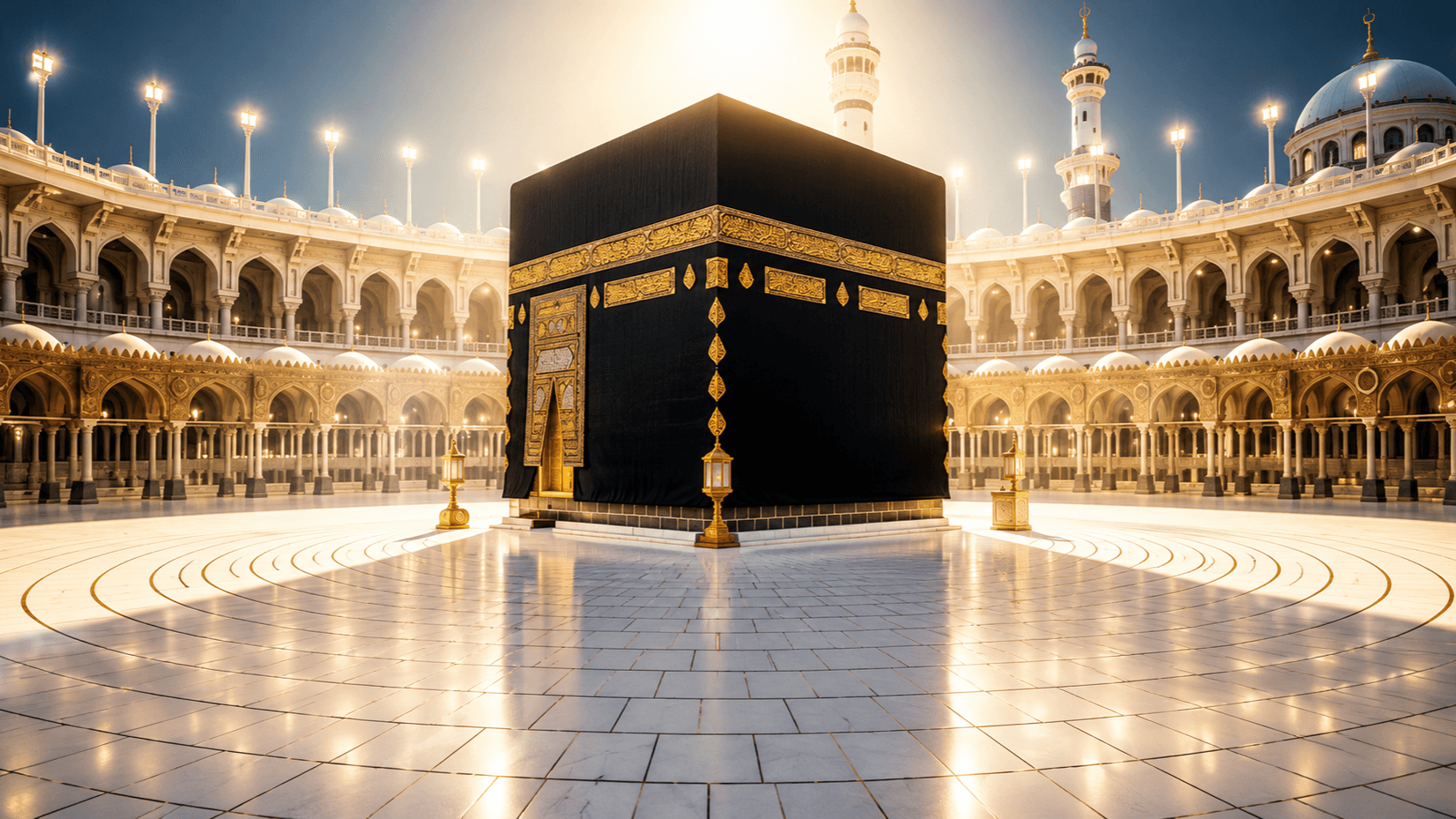
The noble Ka'bah and the Sacred House hold a tremendous status in Islam. Allah, the Exalted, says:
﴿إِنَّ أَوَّلَ بَيْتٍ وُضِعَ لِلنَّاسِ لَلَّذِي بِبَكَّةَ مُبَارَكًا وَهُدًى لِّلْعَالَمِينَ﴾ [آل عمران: 96].
And He, the Exalted, says:
﴿وَإِذْ جَعَلْنَا الْبَيْتَ مَثَابَةً لِّلنَّاسِ وَأَمْنًا﴾ [البقرة: 125].
It is reported in the two Sahihs that the Prophet ﷺ said: "Journeys should not be undertaken except to three mosques: the Sacred Mosque, my mosque, and Al-Aqsa Mosque." (Reported by Al-Bukhari, 1864, and Muslim, 827)
The Prophet's ﷺ reverence for the Sacred House was evident during Hajj and Umrah, as he adhered to the etiquettes of the sacred sanctuary and was keen to perform the rites exactly as Allah commanded. He said: "Take your rites of Hajj from me, for I do not know, perhaps I will not perform Hajj after this year of mine." (Sahih Muslim, 1297)
He ﷺ was the greatest example in revering and adhering to the symbols of Allah.
Reverence for the Noble Qur'an
The Noble Qur'an is the greatest sacred symbol of this Ummah, because it is the speech of Allah, the Exalted, which He revealed as guidance for mankind.
Allah, the Exalted, says:
﴿إِنَّهُ لَقُرْآنٌ كَرِيمٌ فِي كِتَابٍ مَكْنُونٍ لَا يَمَسُّهُ إِلَّا الْمُطَهَّرُونَ﴾ [الواقعة: 77-79].
And He, the Exalted, says:
﴿ذَلِكَ الْكِتَابُ لَا رَيْبَ فِيهِ﴾ [البقرة: 2].
It is reported from Uthman, may Allah be pleased with him, that the Prophet ﷺ said: "The best among you are those who learn the Qur'an and teach it." (Reported by Al-Bukhari, 5027; Abu Dawud, 1452; and At-Tirmidhi, 2907)
It is reported from Abu Umamah, may Allah be pleased with him, that he heard the Messenger of Allah ﷺ say: "Recite the Qur'an, for it will come on the Day of Judgment as an intercessor for its companions." (Sahih Muslim, 804)
Reverence for the Qur'an is not limited to preserving the Mus'haf or taking care of it; it also means believing that it is the speech of Allah, reciting it, reflecting upon it, acting upon its rulings, and calling others to its guidance.
Reverence for Sacred Symbols in the Guidance of the Prophet ﷺ
The Prophet ﷺ was the most reverent of people toward the symbols of Allah, and anyone who reads Zad Al-Ma'ad can see this clearly reflected in his Seerah.
He revered the sanctuary of Makkah, upheld the sanctity of mosques, honoured the sacred months, adhered to all the etiquettes of the rites, and performed acts of worship with reverence and Khushu', not merely as a habit.
Among his sayings ﷺ was: "Your blood, your wealth, your honour, and your bodies are sacred to one another, just as this day of yours is sacred, in this month of yours, in this land of yours." (Reported by Muslim, 1679)
The Prophet ﷺ compared the sanctity of a Muslim's life and rights to the sanctity of sacred time and sacred place, indicating the tremendous importance of sanctities in Islam.
Legitimate Reverence, Not Excess
Reverence for sacred symbols does not mean excess or innovation; rather, it must be in accordance with what Allah and His Messenger have legislated.
Scholars of Ahl as-Sunnah, among them Sheikh al-Islam Ibn Taymiyyah in his book Iqtida' As-Sirat Al-Mustaqim, explained that reverence for the symbols of Allah is achieved by following the Sunnah, without adding acts of worship or practices that Allah has not legislated, because acts of worship are built on following, not innovating.
For this reason, the Prophet ﷺ warned against excess, saying: "Beware of excess in religion, for those before you were destroyed by excess in religion." (Reported by Ahmad, 1851; Sahih Al-Jami', 2680)
A Muslim, therefore, reveres sacred symbols as Allah has commanded, without excess or negligence, preserving the purity of Tawhid.
The Status of Sacred Symbols in the Jurisprudence of Priorities
It is important for a Muslim to realize that reverence for the symbols of Allah is not a mere formality or outward appearance, but one of the great objectives of Islamic law, because it preserves the status of religion in the hearts, instills respect for Allah's commands, and strengthens the identity of the Muslim Ummah.
The more reverence for these symbols increases in the heart, the more eager a Muslim becomes to obey Allah and stay away from disobeying Him. For this reason, Allah made revering them one of the signs of Taqwa.
The sacred symbols in Islam represent educational schools that instill in the Muslim reverence for Allah, and raise him upon obedience to Him and submission to His commands. The Noble Qur'an has linked reverence for them to the piety of hearts, and the Sunnah of the Prophet ﷺ came to demonstrate this meaning in both word and deed.
For this reason, every Muslim should know the sacred symbols of his religion, hold them in reverence, teach his children to respect them, and adhere in revering them to what has come in the Qur'an and Sunnah — avoiding both negligence and excess, following the example of the Prophet ﷺ, who combined perfect reverence with perfect adherence.