

Parenting
The Right of the Neighbour and Its Role in the Formation of a Compassionate Society
July 15, 2026 · 4 min read
By: الأكاديمية
Islam gave great attention to building a society characterized by love, cooperation, and mercy, and among the most important means of achieving this is kindness to one's neighbour. The neighbour is the closest person to a Muslim after his own family, and for this reason Islam granted him great rights and commanded good treatment toward him, because sound relationships between neighbours help spread harmony and strengthen the bonds among members of society.
When people uphold the rights of their neighbours, everyone lives in security and affection, and society becomes more cohesive and merciful.
The status of the neighbour in Islam
The rights of the neighbour
The effect of kindness to the neighbour on building society
Examples from the guidance of the Prophet ﷺ in treating neighbours
The role of the family and educational institutions
The Status of the Neighbour in Islam
Islam gave a great commandment concerning the neighbour, making kindness toward him one of the signs of complete Iman.
Allah, the Exalted, says:
﴿وَاعْبُدُوا اللَّهَ وَلَا تُشْرِكُوا بِهِ شَيْئًا وَبِالْوَالِدَيْنِ إِحْسَانًا وَبِذِي الْقُرْبَىٰ وَالْيَتَامَىٰ وَالْمَسَاكِينِ وَالْجَارِ ذِي الْقُرْبَىٰ وَالْجَارِ الْجُنُبِ وَالصَّاحِبِ بِالْجَنْبِ وَابْنِ السَّبِيلِ﴾
(سورة النساء: 36).
Allah, the Exalted, joined the right of the neighbour with worship of Him and kindness to one's parents, indicating the great status of the neighbour in Islam.
The Prophet ﷺ said: "Jibril kept advising me about the neighbour until I thought he would grant him a share of inheritance."
This Hadith shows how frequently the neighbour was recommended, and how great his right is before Allah, the Exalted.
What Are the Rights of the Neighbour?
The neighbour has many rights, including:
Greeting him with Salam
Speaking kindly to him
Helping him when needed
Visiting him when he is ill
Congratulating him on permissible occasions
Consoling him during calamities
Keeping his secrets and respecting his privacy
Refraining from harming him, whether by word or by deed
The Prophet ﷺ said: "Whoever believes in Allah and the Last Day should not harm his neighbour." (Agreed upon; reported by Al-Bukhari in Al-Adab, 6018, and Muslim in Al-Iman, 47)
Refraining from harming one's neighbour is among the signs of Iman, just as kindness toward him is a cause of people's love and the spread of goodness.
The Effect of Kindness to the Neighbour on Building Society
When every Muslim is keen to fulfill his neighbour's rights, love spreads among people, and everyone feels a sense of security and comfort.
Among the fruits of kindness to one's neighbour are:
Increased harmony among members of society
The spread of a spirit of cooperation and mutual help
Strengthened trust among people
Reduced problems and disputes
Raising children upon good character
Achieving a society characterized by mutual mercy and solidarity
For this reason, Islam linked the soundness of the individual with the soundness of society, because good character begins at home, then extends to one's neighbours, then to society as a whole.
Examples from the Guidance of the Prophet ﷺ with Neighbours
The Prophet ﷺ was an example in good treatment of neighbours. He advised kindness toward them, urged refraining from harming them, and explained that the true Muslim is one from whose harm people are safe.
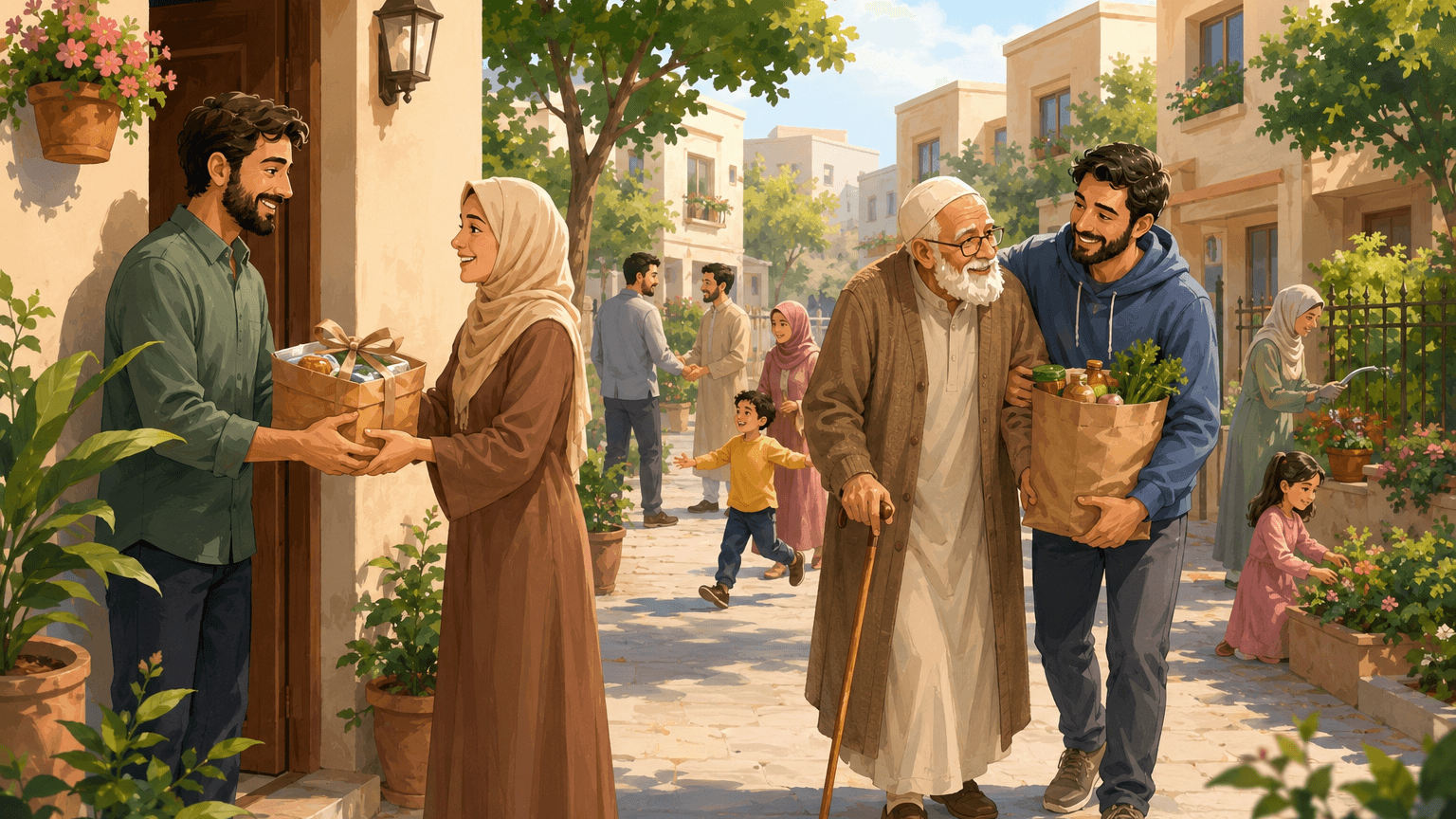
He also encouraged exchanging gifts, even if small, because a gift strengthens love between neighbours.
The Companions, may Allah be pleased with them, were keen to carry out these instructions, until relationships between neighbours became an example of love and cooperation.
The Role of the Family and Educational Institutions
The family and the school have a major role in teaching children the rights of the neighbour, through:
Instilling the value of respecting neighbours
Accustoming children to giving Salam
Encouraging them to help neighbours when needed
Teaching them to maintain quiet and avoid disturbing others
Providing good example in dealing with neighbours
When children see this character at home and at school, they grow up appreciating the right of the neighbour and being keen to show him kindness.
The right of the neighbour is among the great virtues that Islam called for, and it is a cause for spreading mercy and love among people. The more a Muslim upholds the rights of his neighbours, the more cohesive, secure, and stable society becomes. For this reason, we should raise our children to respect their neighbours, show them kindness, and refrain from harming them, so that they may contribute to building a compassionate society governed by noble character.