Prophetic Biography and Sunnah
In the Embrace of the Prophetic Biography Educational Grounding and the Building of Youth Consciousness
June 14, 2026 · 5 min read
By: الأكاديمية
The Prophetic biography (Seerah) constitutes one of the pillars of the Islamic sciences. It plays a central role in consolidating a sound faith-based worldview and shaping a balanced Islamic character — particularly during youth, the stage at which convictions crystallize and orientations are formed. It is not a historical narrative of sequential events; it is a living educational methodology that addresses the questions of the human being in his lived reality, offering practical models for spiritual purification, the entrenchment of values, the rectification of conduct, and the skillful navigation of life's challenges.
Proceeding from the mission of Islamic education, the need is affirmed to present the Prophetic biography in a conscious educational form — one that connects the text to reality, reveals the higher purposes within the events, and transforms the study of the Seerah from preserved knowledge into an effective instrument for building the human being and forming his awareness.
The Prophetic Biography and the Methodology of Faith-Based Education
The Prophetic biography establishes a firm faith-based educational methodology — one grounded in magnifying God in the hearts, deepening the meanings of Tawhid, and linking conduct to a conscious inner accountability. The Prophet ﷺ began his reformative project by building faith before elaborating rulings, thereby affirming a profound educational principle: that the uprightness of the outward is the fruit of the soundness of the inward, and that conduct cannot be sustained unless it is underpinned by firm certainty. The study of the Seerah also fosters a conscious love of the Prophet ﷺ — a love that yields emulation rooted in understanding and insight, rather than blind imitation — so that following him becomes not a formal practice, but a commitment born of awareness and comprehension.
Building a Balanced Character in the Light of the Seerah
The Prophetic biography presents a comprehensive model of the Muslim character — a model that achieves balance between the needs of the spirit and the body, between firmness in principles and flexibility in means. It draws the portrait of a human being who combines worship and the building of civilization, strength and mercy, resolve and gentleness, positive individuality and a sense of collective responsibility. Through this model, young people learn that Islam neither creates a person closed off from his reality, nor drives toward extremism or negligence — rather, it cultivates a conscious character capable of engaging positively with life's challenges without compromising its constants.
The Place of Youth in the Prophetic Project
The Prophetic biography reveals the central place of youth in the project of building and reform — they were at the forefront of those who carried the call, pioneers of knowledge, and holders of defining stances. The Prophet ﷺ entrusted them with responsibility, raised them to bear burdens with integrity, and channeled their energies with wisdom — shaping from them models of giving and dedication. This educational approach affirms that youth is not a time of waiting or marginality, but a stage of preparation, construction, and action — and that Islam recognizes the capacity of young people to contribute to reform and change when their energies are properly directed.
Education in Patience and Steadfastness
The Prophetic biography abounds with profound educational episodes that entrench the meanings of patience, graceful response to trial, and steadfastness in truth during times of hardship. The Prophet ﷺ and his Companions faced manifold forms of harm and pressure — yet the moral methodology remained ever-present, and adversity was never allowed to become a justification for deviation or loss of composure. This is a lesson of immense educational significance for young people living in a reality characterized by rapid pace, dominated by a culture of immediate results, and sometimes lacking in awareness of the laws of change and gradual construction.
Ethical Values in Practical Application
Ethics in the Prophetic biography were never presented as abstract ideals — they were always bound to everyday situations and lived reality. Truthfulness, justice, trustworthiness, forbearance, and self-restraint were all values embodied in the Prophet's ﷺ conduct and dealings, and were among the greatest causes of his influence and the spread of his call. The study of these dimensions contributes to consolidating ethical consciousness in young people and linking values to practical conduct — so that morality does not remain a raised slogan, but becomes a living, active behavior.
The Jurisprudence of Managing Disagreement in the Light of the Seerah
The Prophetic biography offers a balanced educational framework for managing disagreement — grounded in fairness, respect for the human being, consideration of purposes and consequences, and the combination of firmness with mercy. This methodology enabled the preservation of social unity while accommodating diversity and difference. This lesson stands out as an urgent need for youth at a time when circles of disagreement are widening, the culture of dialogue is weakening, and disciplined engagement with contested issues is sometimes absent.
The Seerah and the Strengthening of Identity and Psychological Equilibrium
The Prophetic biography contributes to consolidating a conscious Islamic identity, and equips young people with faith-based and psychological tools that help them face anxiety, pressures, and intellectual challenges. It presents a realistic model of life in all its vicissitudes — encompassing success and failure, pain and hope — within a balanced faith framework that grants tranquility and meaning.
Teaching the Prophetic biography does not aim at the acquisition of abstract knowledge — it seeks to build the conscious Muslim who is grounded in his faith, balanced in his character, capable of reforming himself, and able to contribute positively to the reform of his society.
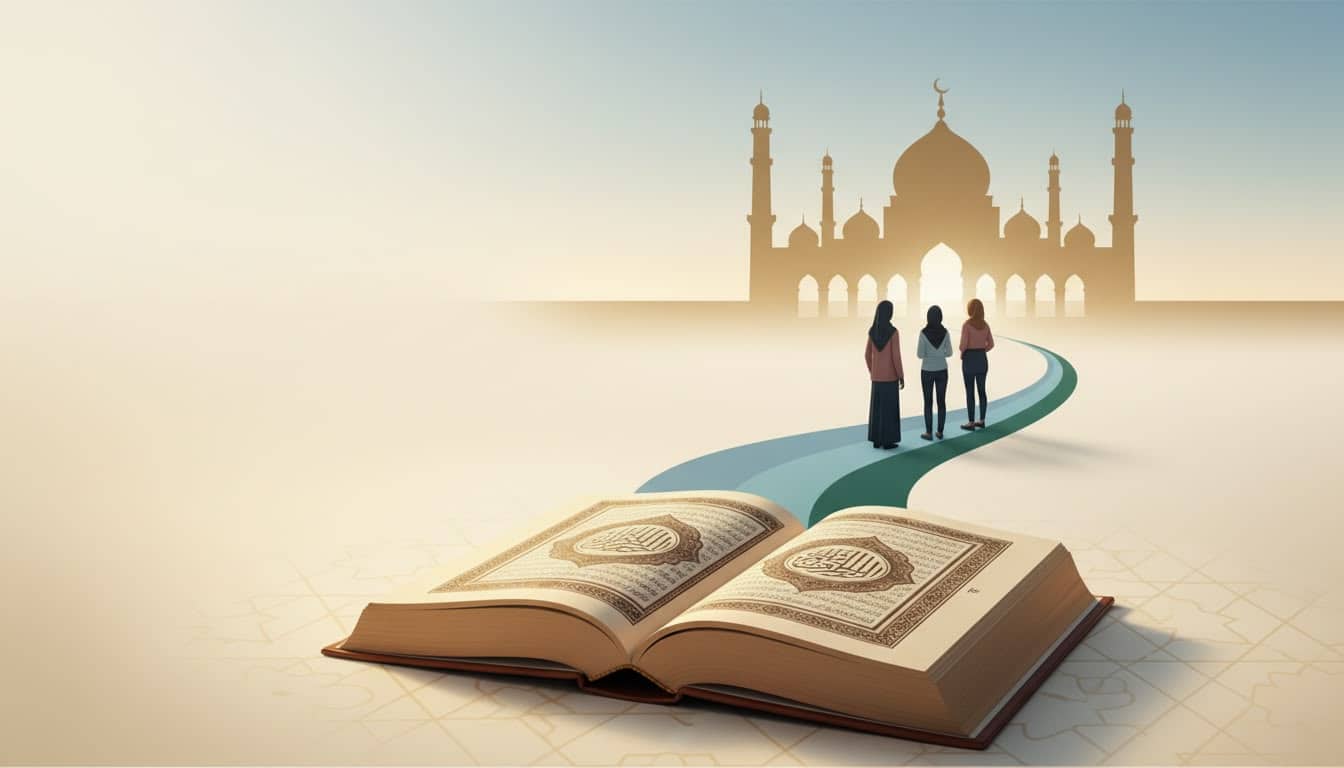
When the Seerah is presented through a systematic educational approach, it transforms from an academic subject into a way of life — from a memorized history into a living, ever-renewed consciousness that accompanies the Muslim on his journey and guides his steps through a changing world.
Related posts
June 11, 2026 · Prophetic Biography and Sunnah · 3 min read
Beyond Memorization: How True Understanding of Hadith Transforms Knowledge into a Way of Life
June 14, 2026 · Aqeedah & Iman · 3 min read
Religious Education Between Stability and Development
June 14, 2026 · Parenting · 4 min read