Parenting
From Consumer to Creator: How Does a Young Person Leave an Impact, Not Just a Footprint?
July 18, 2026 · 6 min read
By: الأكاديمية
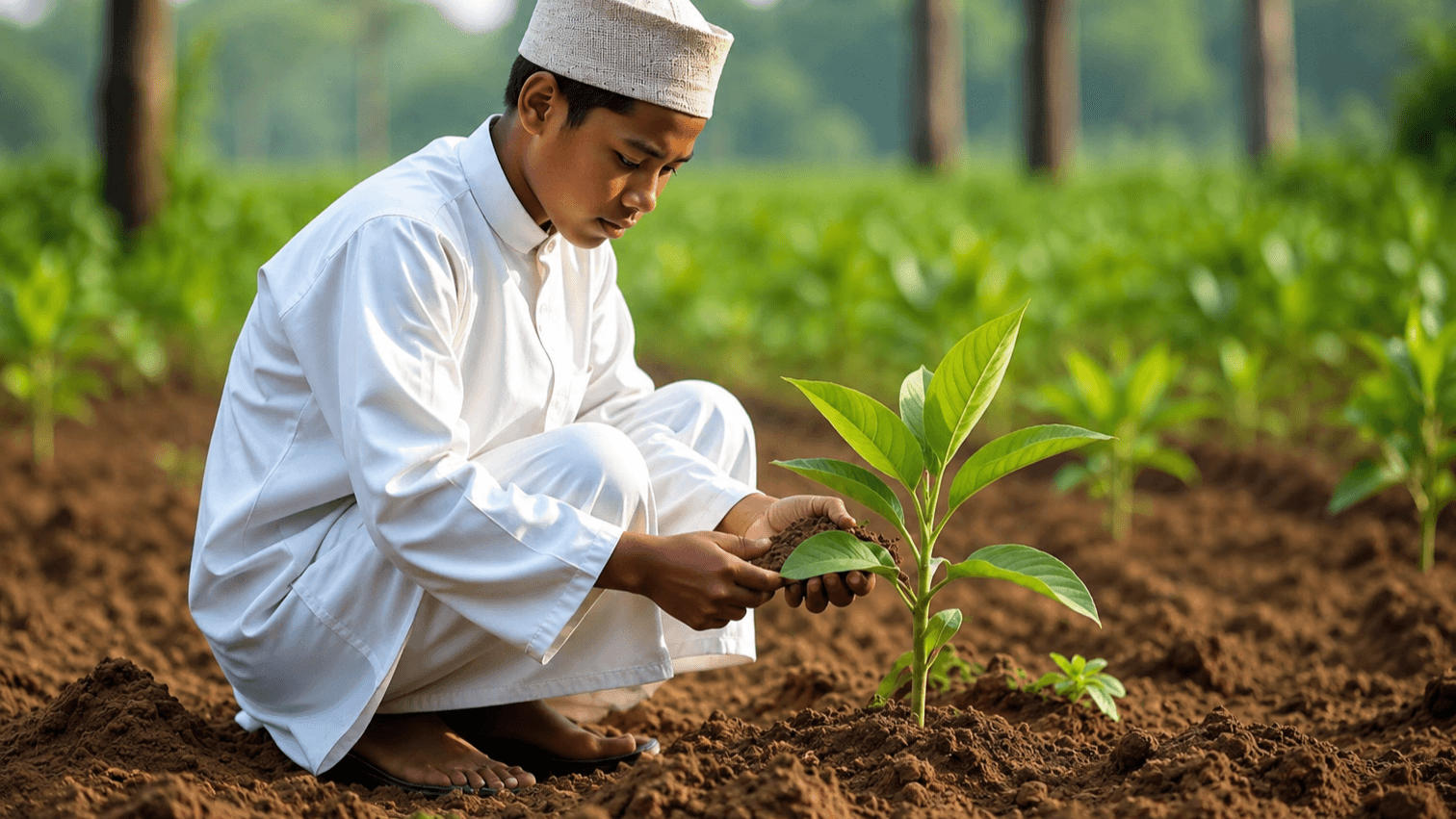
In a time filled with entertainment and consumption, many young people have become more concerned with visibility and gaining attention than with creating a real impact on their lives and their society. There is a great difference between leaving a fleeting footprint that people notice for a short while, and leaving a lasting impact whose benefit extends and continues even after one's passing.
Allah created man to be the bearer of a mission, not merely a follower of what others produce. He, the Exalted, says:
﴿هُوَ أَنشَأَكُم مِّنَ الْأَرْضِ وَاسْتَعْمَرَكُمْ فِيهَا﴾ [هود: 61]
He also made this Ummah a witness over people, saying:
﴿وَكَذَٰلِكَ جَعَلْنَاكُمْ أُمَّةً وَسَطًا لِّتَكُونُوا شُهَدَاءَ عَلَى النَّاسِ﴾ [البقرة: 143]
This testimony is not achieved through mere existence, but through knowledge, action, self-correction, serving people, and leaving behind a good impact that remains after one's departure.
What is the difference between a footprint and an impact?
Why do some young people turn into mere consumers?
How does the Qur'an shape a productive and impactful character?
Practical steps to create a lasting impact
Inspiring examples of impact-making in Islam
A Footprint and an Impact... What's the Difference?
A person may achieve widespread fame or a strong presence on social media, but this does not mean he has left behind a genuine impact.
An impact, on the other hand, is any righteous deed that benefits people, draws its doer closer to Allah, and whose benefit continues over time.
The Prophet ﷺ pointed to this meaning, saying: "When the son of Adam dies, his deeds come to an end except for three: ongoing charity, knowledge that is benefited from, or a righteous child who prays for him." (Sahih Muslim, 1631)
These deeds are not limited to a person's lifetime; their effect extends even after his passing, and this is the true impact that every Muslim should strive for.
Why Do Some Young People Turn into Mere Consumers?
The problem is not a lack of resources, but a way of thinking and a weak sense of purpose.
Among the most notable obstacles that prevent the creation of impact:
Scattered Focus
A person becomes preoccupied with everything new, moving between interests without a clear goal, and his energy is wasted on what brings no benefit.
The Prophet ﷺ said: "Part of the excellence of a person's Islam is his leaving that which does not concern him."Reported by At-Tirmidhi (2317), and Ibn Majah (3976); graded authentic by Al-Albani
Wasted Time
Many young people spend long hours consuming content and entertainment, while the time set aside for knowledge, work, or skill development shrinks.
Allah swore by time itself to draw attention to its value, saying:
﴿وَالْعَصْرِ إِنَّ الْإِنسَانَ لَفِي خُسْرٍ﴾ [العصر: 1-2]
Weak Resolve
Some young people are content to remain mere spectators, waiting for someone else to change reality, while the proactive believer always asks himself: what can I contribute?
Forgetting One's Purpose
When worldly life becomes the goal, a person turns into a consumer of what others produce; but when he keeps his purpose in life in mind, he becomes more focused on building and giving.
Allah, the Exalted, says:
﴿وَمَا خَلَقْتُ الْجِنَّ وَالْإِنسَ إِلَّا لِيَعْبُدُونِ﴾ [الذاريات: 56]
The Qur'an... Shapes the Human Being Before It Shapes Civilization
The Qur'an is not merely a book to be recited; it is a way of life that builds a Muslim's character and instills within him responsibility and a proactive spirit.
Allah, the Exalted, says:
﴿إِنَّ هَٰذَا الْقُرْآنَ يَهْدِي لِلَّتِي هِيَ أَقْوَمُ﴾ [الإسراء: 9]
Whoever reflects on the Qur'an finds that it:
Directs young people toward seeking beneficial knowledge, building within them a conscious, educated mind capable of distinguishing truth from falsehood, and understanding reality and dealing with it wisely.
Urges them toward righteous action, so that knowledge does not remain confined to the mind, but transforms into practical behaviour and beneficial achievement that reflects on the individual and society.
Calls for setting things right on earth, instilling in a young person's character the spirit of initiative and community service, making him a positive contributor who seeks to benefit people and build up life.
Raises the Muslim upon excellence (Ihsan) and mastery in his work, driving him to perform his tasks in the best possible way, and to remain mindful of Allah's watchfulness in everything he does.
Emphasizes the value of responsibility, so a young person grows up aware of the trust Allah has placed upon him, bearing his responsibilities, far from passivity and dependence, and contributing effectively to building his society.
The Prophet ﷺ said: "The most beloved of people to Allah are those most beneficial to people." (As-Silsilah As-Sahihah, 906; reported by At-Tabarani in Al-Mu'jam Al-Awsat, 6026)
The more a person benefits others, the greater his impact becomes.
How Do You Create a Lasting Impact?
First: Have a Clear Mission
Ask yourself: in what field can I serve my religion and my community?
Clarity of purpose saves a great deal of effort.
Second: Learn Before You Act
Knowledge is the foundation of every beneficial impact.
Allah, the Exalted, says:
﴿قُلْ هَلْ يَسْتَوِي الَّذِينَ يَعْلَمُونَ وَالَّذِينَ لَا يَعْلَمُونَ﴾ [الزمر: 9]
And the Prophet ﷺ said: "Whoever Allah wishes good for, He grants him deep understanding of the religion."Reported by Al-Bukhari (71), and Muslim (1037)
Third: Turn Knowledge into Action
Knowledge alone is not enough; its value only appears when it transforms into behaviour, initiatives, and service to people.
Allah, the Exalted, says:
﴿وَقُلِ اعْمَلُوا فَسَيَرَى اللَّهُ عَمَلَكُمْ﴾ [التوبة: 105]
Fourth: Set Your Heart Right
Sincerity is the secret to the acceptance and blessing of one's deeds.
The Prophet ﷺ said: "Actions are but by intentions, and every person shall have only what he intended."Reported by Al-Bukhari (1) and Abu Dawud (2201), both with this exact wording, and Muslim (1907) with similar wording.
A small deed done with sincerity may be greater in Allah's sight than many deeds tainted by showing off.
Fifth: Stay Consistent, Even If the Deed Is Small
Impact is not created by a single great deed, but by ongoing righteous deeds.
The Prophet ﷺ said: "The deeds most beloved to Allah are those done most consistently, even if small."Reported by Al-Bukhari (6465), and Muslim (783)
Inspiring Examples of Impact-Making
The first generation of Muslims was an example of turning Iman into action, and the Qur'an into lived reality.
They moved from being a scattered nation to a nation leading through knowledge, justice, and good character, because they did not settle for merely memorizing the Qur'an, but made it a methodology for their lives, and its effect appeared in their worship, their character, their dealings, their knowledge, and their Da'wah.
This path is not confined to a particular generation; it is open to every young person who makes the Qur'an the guide of his life and strives to benefit people however he can.
True success does not lie in the number of followers, nor in fleeting fame, but in a lasting impact and a righteous deed with which a servant meets his Lord.
Allah, the Exalted, says:
﴿إِنَّا نَحْنُ نُحْيِي الْمَوْتَىٰ وَنَكْتُبُ مَا قَدَّمُوا وَآثَارَهُمْ﴾ [يس: 12]
And the Prophet ﷺ said: "Whoever guides someone to good has a reward like the one who does it."
Be diligent in having a share of knowledge you spread, a project through which you benefit people, good character that others follow, a call to Allah, or a righteous deed whose effect remains after your passing.
True impact is not what people say about you, but what remains for you with Allah, and the good that your deeds leave behind in the lives of others.
Related posts
July 19, 2026 · Parenting · 4 min read
To Be a Muslim in the West: From Reaction to a Purposeful Mission
July 19, 2026 · Parenting · 4 min read
Cultivating the Earth While Living Abroad: A Presence, Not a Withdrawal
July 19, 2026 · Parenting · 4 min read