Parenting
When Society Doesn't Raise Your Children: Your Responsibility in Building Their Identity
July 19, 2026 · 4 min read
By: الأكاديمية
The surrounding environment usually helps a family raise its children. In many Muslim societies, a child learns the same values at home, at school, at the mosque, and among friends. But when a family lives in a society whose culture and values differ from its own, the parents' responsibility becomes greater, because children may not find anyone around them reinforcing their religious and cultural identity.
For this reason, building identity cannot be left to chance or to the surrounding circumstances; it requires a conscious effort from the family, so that children grow up knowing who they are, what values they believe in, and how to live positively within the society around them.
Why does Tarbiyah differ in non-Muslim societies?
The family is the first school of identity
What is meant by identity?
How do we build a strong identity in our children?
Practical steps for the family
Why Does Tarbiyah Differ in Non-Muslim Societies?
In some environments, a child finds continuous support for his values from school, society, and friends. In environments whose culture differs from the family's, however, children may be exposed to ideas and customs unlike what they learn at home.
This does not mean that society is an enemy, or that the family should live in isolation, but it does mean that parents need to play a greater role in guidance, follow-up, and building genuine conviction in their children.
The Family Is the First School of Identity
Before a child is influenced by school or social media, he is influenced by his family. The home is the place where he first learns values, and where he forms his image of himself, his religion, and his community.
When children feel proud of their identity within the family, they become more capable of preserving it outside the home. For this reason, the conversation about identity does not begin in adolescence; it begins from the earliest years of a child's life, through good example, dialogue, and attention.
What Is Meant by Identity?
Identity is not merely a name, a nationality, or a language; it is the set of values, principles, and affiliations that shape a person's character.
A Muslim's identity includes:
His relationship with Allah, the Exalted
His pride in his religion and values
His sense of belonging to his Ummah
His character and the way he deals with others
The clearer these aspects are in children's lives, the stronger and more firmly rooted their identity becomes.
How Do We Build a Strong Identity in Our Children?
Building identity is not achieved through commands alone; it requires ongoing Tarbiyah built on understanding and genuine conviction.
Among the most important means:
Strengthening the Relationship with Religion
When children learn the Qur'an and Sunnah in a way suited to their age, and understand the meanings and purposes of acts of worship, their relationship with their religion becomes stronger and deeper.
Dialogue and Listening
Children need someone to listen to their questions and challenges without fear or tension. Calm dialogue helps them understand values and hold onto them out of genuine conviction.
Providing Good Example
Children learn more from what they see than from what they hear. For this reason, parents' commitment to their values and character leaves a great impact on their children's hearts.
Connecting Identity to Daily Life
It is important for children to see that Islam is not merely information or rituals, but a way of life reflected in honesty, trustworthiness, mercy, and respect for others.
Practical Steps for the Family
A family can support its children's identity through:
Setting aside time for family dialogue
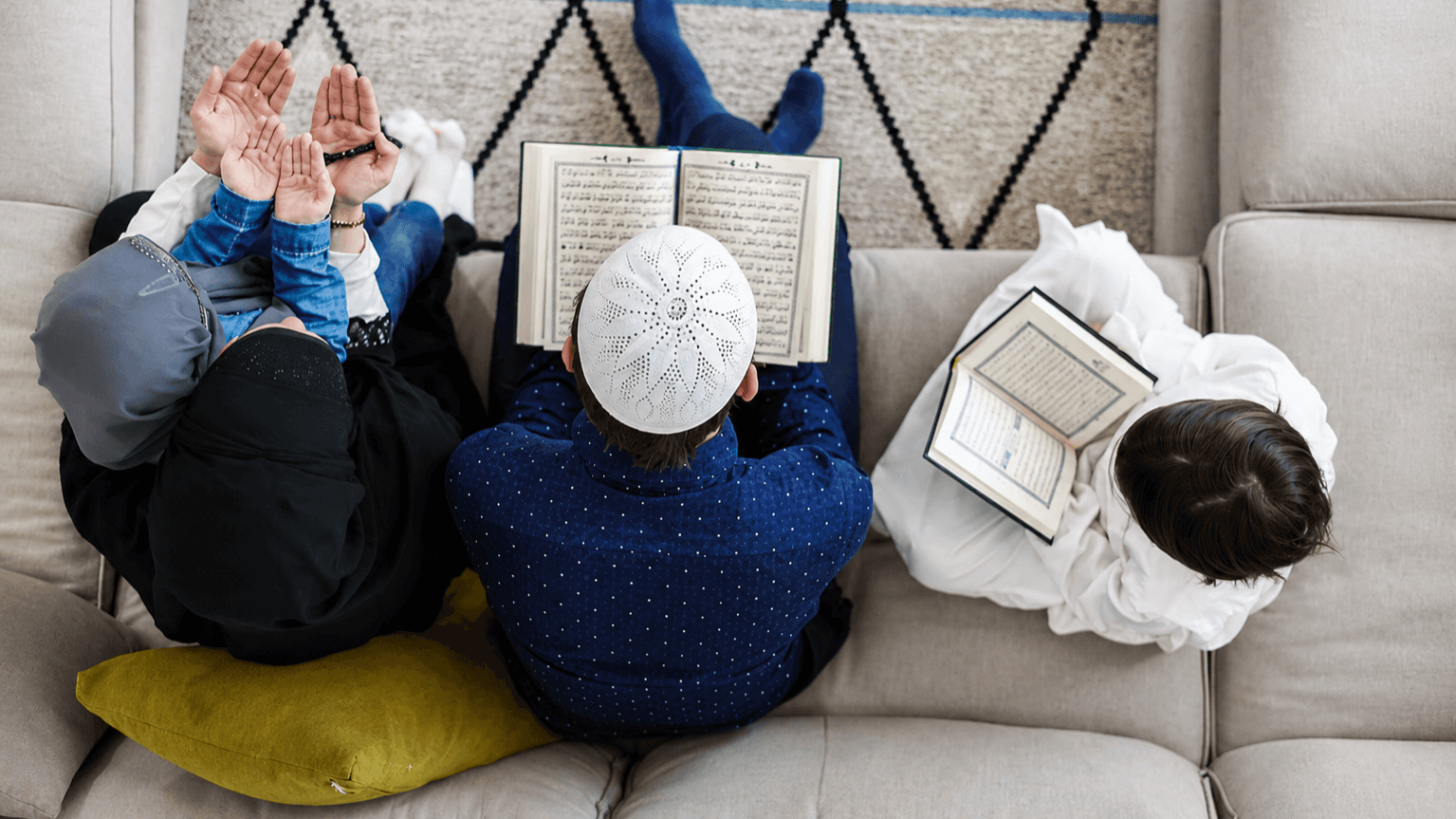
Reading the Qur'an and learning its meanings together with the children
Connecting occasions and events to Islamic values
Encouraging children to form positive friendships
Involving them in beneficial activities and initiatives
Being attentive to teaching the Arabic language as much as possible
When the surrounding environment is not able to support children's identity, the family's responsibility becomes greater and more important. A strong identity is not built in a single day, but grows through conscious Tarbiyah, dialogue, and good example.
Every effort parents make today in instilling values and building a sense of belonging is a long-term investment that helps their children remain steadfast in the face of challenges, succeed in their lives, and take pride in their religion and identity wherever they may be.
Related posts
July 19, 2026 · Parenting · 4 min read
Stewardship and Mission: What Does It Mean to Live Here with Purpose?
July 19, 2026 · Parenting · 4 min read
Fitrah in the Wind: How Do We Preserve Our Children's Innate Nature?
July 19, 2026 · Parenting · 4 min read