

Parenting
Cosmic Reflection Between Knowledge and Faith
July 18, 2026 · 5 min read
By: الأكاديمية
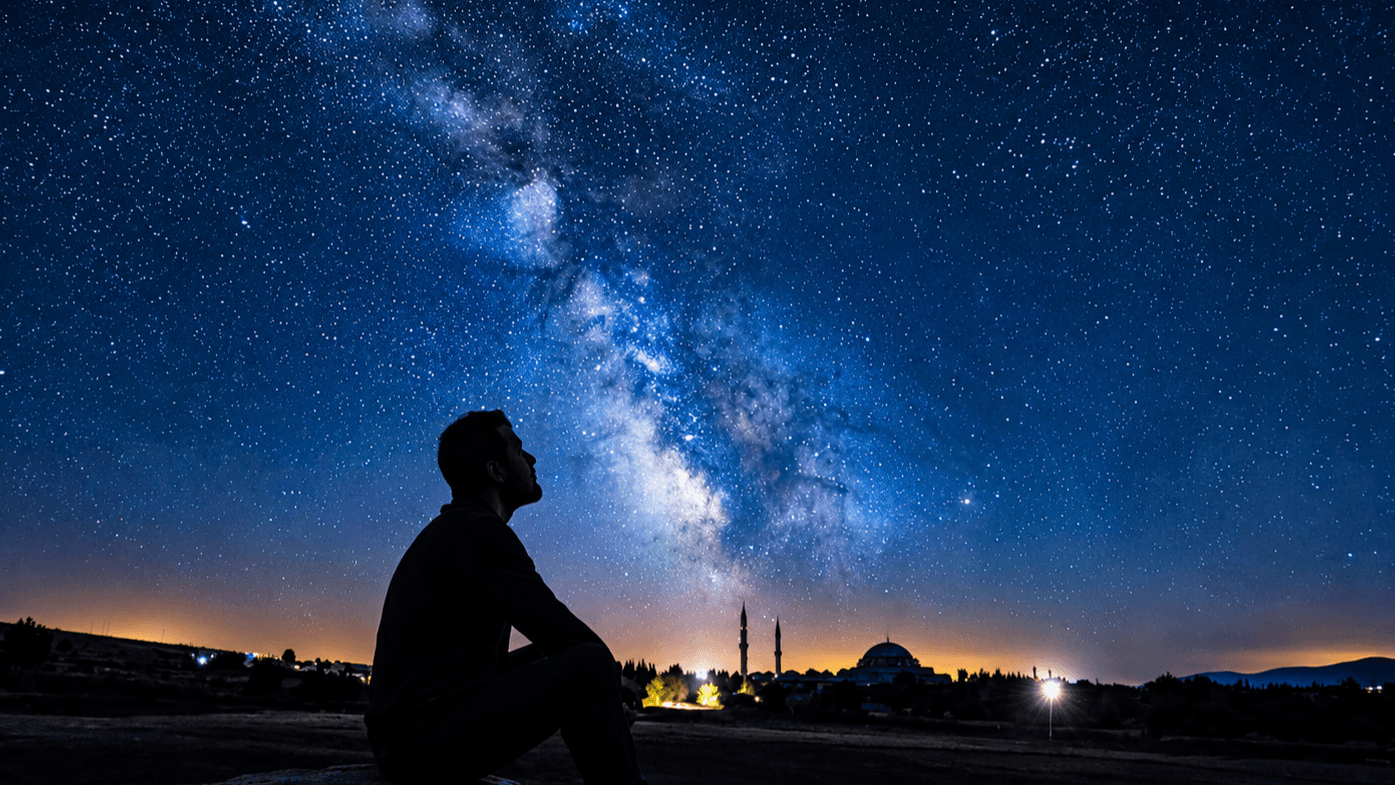
In a world growing ever noisier and faster-paced, a person gradually loses his capacity for reflection and wonder before the grandeur of the universe around him. While daily details consume us, the sky, with its awe-inspiring vastness, remains an open invitation to rebuild our awareness and restore our inner balance. This article offers a journey into the "architecture of reflection," where contemplating the universe shifts from a mere passing glance into a cognitive and spiritual practice that reorders our thoughts, frees the mind from the grip of the familiar, and opens broader horizons for understanding the self and existence.
Recovering wonder within the sanctuary of cosmic design
Reflection is not merely "seeing," but mental "construction"
The grandeur of vastness and the paradox of human humility
Putting personal crises into perspective
Dismantling self-centredness
Fuelling intellectual curiosity
The laws of the universe as a mirror of moral laws
Reflection as a mechanism for liberation from the "prison of the familiar"
Contemplation as a necessity for restoring awareness
Recovering Wonder Within the Sanctuary of Cosmic Design
Modern man today is submerged in narrow daily details, hemmed in between the concrete walls of cities and the screens of devices that never stop their noise. This immersion in "trivial matters" has caused the sense of wonder to atrophy, and has severed our connection with the grand "cosmic design" characterized by balance and vastness. What we need today is not to escape reality, but to rediscover the "structural foundations" of existence that connect us to our origin and grant us a horizon that transcends the narrow confines of the self. Innate curiosity is the driving force that must be recovered so that we may perceive the magnificent cosmic order — paving the way toward a deeper understanding of the nature of existence and our place within it, as we shall see in the themes that follow.
Reflection Is Not Merely "Seeing," but Mental "Construction"
According to this contemplative view, reflecting on the dominion of the heavens and the earth goes beyond being a passive state of visual enjoyment; it is an active process of "inner architecture" that restores what the rush of life has damaged in our minds. The reflective mind does not merely observe phenomena, but works like an engineer searching for "proportions" and "equilibrium" among the components, ultimately leading to a reordering of the mind's priorities according to the grand scale of things.
This concept changes our traditional view of contemplation; rather than being a "break" from thinking, it becomes "the highest form of thinking," where observation transforms from mere sensory perception into a process of "constructing" meaning within the soul.
"The essence of reflection lies in transforming visual observation into cognitive construction; a person no longer sees the stars as mere points of light, but as structural foundations pointing to the unity of design and the greatness of the One who governs it all."
The Grandeur of Vastness and the Paradox of Human Humility
When a person confronts the vastness of galaxies and the immense distances measured in light, he experiences a positive shock that unsettles his inflated sense of self. This vastness places a person in his true proportion, which may seem "jarring" to someone accustomed to seeing himself as the centre of the world and the focal point of all existence. Yet this humility is not a defeat, but a "recalibration" of the human scale of measurement.
The importance of this vastness reveals itself in the following dimensions:
Putting personal crises into perspective: When our daily worries are compared to the grandeur of the laws governing billions of galaxies, those worries lose their power to crush our spirits.
Dismantling self-centredness: Recognizing that we are part of a greater overall system reduces the intensity of human arrogance and opens the door to wisdom.
Fuelling intellectual curiosity: Feeling the smallness of our knowledge before the "architecture of existence" drives us to keep searching and questioning, rather than settling for ignorance.
The Laws of the Universe as a Mirror of Moral Laws
This contemplative view teaches us that the strict order of the universe is not a mere material coincidence, but a reflection of deep structural foundations. This design tells us clearly that the universe knows no randomness; every celestial body moves according to a decreed measure and a disciplined path. This certainty that we live in a world governed by wisdom and balance grants the reader a sense of reassurance; if the distant star does not stray from its path, then surely our human existence has a higher purpose that transcends meaninglessness.
Linking cosmic order to human values turns contemplation into a moral journey; just as the universe cannot function without disciplined laws, so too human life gains no true value except through commitment to truth, honesty, and responsibility.
Reflection as a Mechanism for Liberation from the "Prison of the Familiar"
The greatest threat to the human spirit is "the boredom of habituation," where cosmic wonders become ordinary simply through repeated exposure. Reflecting on the architecture of the universe acts like a surgical scalpel, freeing perception from the "prison of the familiar," and drawing us out of narrow horizons into the vastness of total awareness.
The psychological effect of this liberation goes beyond mere comfort; it changes the "neural map" of how we respond to pressure. Rather than being confined to the "room of habitual thoughts," cosmic contemplation grants us a capacity for "intellectual flight" that makes problems appear like specks of dust before a vast galaxy, protecting the soul from burnout and from being held hostage to the present moment.
"True liberation begins when we break through the walls of the familiar with the strikes of contemplation, so that the sun of knowledge may rise over spaces within the soul we did not know existed."
The architecture of reflection is not an intellectual luxury; it is an existential necessity for restoring our scattered awareness. It is an invitation to shift our gaze from the "earth," filled with noise, to the "sky," filled with tranquility and order, so that we may draw from it our steadiness and balance. Openness to the grandeur of creation redefines us to ourselves, and helps us perceive beauty not only in the stars, but in the details of our own lives, reshaped by the ink of light drawn from these greater truths.
Related posts
July 19, 2026 · Parenting · 4 min read
To Be a Muslim in the West: From Reaction to a Purposeful Mission
July 19, 2026 · Parenting · 4 min read
Cultivating the Earth While Living Abroad: A Presence, Not a Withdrawal
July 19, 2026 · Parenting · 4 min read