Parenting
General Manners... A Small Habit That Shapes a Great Human Being
July 14, 2026 · 5 min read
By: الأكاديمية
General manners are not simply behaviours that make a child appear polite in front of others; they are an important part of a child's upbringing and character formation. A child who learns good manners from an early age grows up respecting himself, respecting those around him, and knowing how to treat people kindly.
Islam did not concern itself with acts of worship alone, but also with morals and manners, because the true Muslim combines good worship with good conduct toward others.
Accustoming children to good manners from a young age is extremely important, because the habits a child acquires in his early years usually stay with him as he grows older. Tarbiyah, therefore, does not mean teaching information alone; it also means instilling good habits until they become part of the child's character.
The concept of general manners and their importance
General manners in the balance of Islam
The effect of habituation on building a child's character
The role of manners in developing discipline and good conduct
The role of the family and school in instilling manners
Practical means of accustoming children to general manners
General Manners Are an Act of Worship, Not Merely a Matter of Taste
Some people may think that general manners are simply a matter of taste or courtesy, but Islam views them as an act of worship for which the Muslim is rewarded if he intends by them the pleasure of Allah.
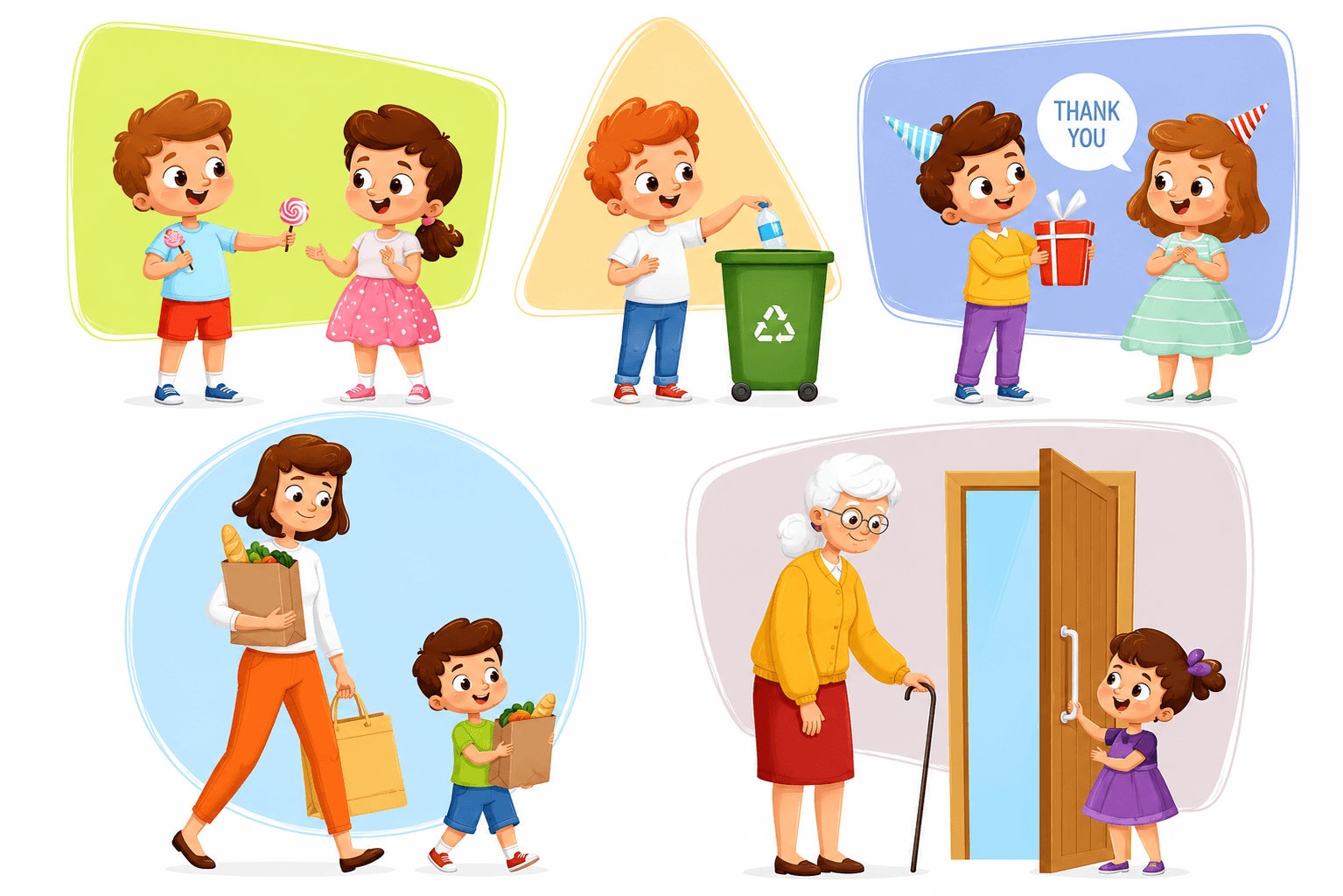
Smiling, greeting others with Salam, respecting elders, being gentle with the young, lowering one's voice, maintaining cleanliness, asking permission, abiding by order, and removing harm from the road — these are all simple deeds, yet they reflect sound Iman and beauty of character.
The Prophet ﷺ was the greatest example of good manners, so much so that Allah praised him, saying: "And indeed, you are of a great moral character." His conduct was a practical application of the teachings of Islam.
Habituation Is Better Than Excessive Talk
Parents may advise their children often, but advice alone is not enough unless it becomes a habit the child practises every day.
A child learns more through practice than through words. When he becomes accustomed to greeting others with Salam, tidying his belongings, apologizing when he errs, respecting his turn, and maintaining cleanliness, these behaviours become part of his character, and he no longer needs to be reminded of them each time.
For this reason, successful Tarbiyah is concerned not only with what a child knows, but also with what he has become accustomed to doing.
Manners Teach the Child Discipline
One of the most important benefits of accustoming a child to general manners is that he learns discipline and commitment from within himself, not merely out of fear of punishment or supervision.
When he becomes accustomed to respecting order, keeping appointments, and not harming others, he does so even when no one is watching him, because he has become convinced that this is the correct way to act.
This is the true goal of Tarbiyah: that a person does good because he believes in it, not because he fears punishment.
Manners Make a Child Beloved
Success in life does not depend on intelligence or knowledge alone; it also requires good character.
A well-mannered child is loved by people, respected by his teachers, and makes friends easily, because he treats everyone well.
As for a child who is accustomed to raising his voice, mocking others, or disrespecting their rights, he may possess great abilities, yet his poor character may deprive him of many opportunities.
For this reason, good character has always been among the greatest causes of people's love and acceptance.
Family Is the First School
The home is the first place where a child learns manners.
A child imitates his parents more than he listens to their advice. If he sees his parents speaking politely, respecting others, maintaining order, and apologizing when they err, he will learn these behaviours easily.
But if the parents say one thing and do another, the child will learn more from their actions than from their words.
For this reason, good example has always been among the most powerful means of Tarbiyah.
The School Completes the Role of the Family
After the family comes the role of the school or educational academy, which does not teach academic subjects alone, but also helps raise children to respect time, order, the etiquette of dialogue, cooperation with others, and the upkeep of public property.
When the home and the school cooperate in instilling these values, the result is a child of good character, strong personality, and benefit to his community.
How Do We Accustom Our Children to General Manners?
Manners can be instilled in children through simple means, including:
Beginning to teach them manners from an early age
Parents being a good example for them
Training them to apply manners in their daily lives
Encouraging and praising them when they behave well
Correcting their mistakes gently and calmly, without mockery or humiliation
Reminding them that good manners are among the teachings of Islam, and that Allah loves those of good character
Making manners a part of family life, both inside and outside the home
A righteous society is not built on laws alone; it is built on people who were raised to respect others, commit to order, uphold rights, and treat everyone well.
For this reason, accustoming children to general manners is not a simple or secondary matter, but a foundation in building Muslim character. A child raised on good manners grows up with good character, beneficial to his family and community, and presents a beautiful image of Islam wherever he goes.
Related posts
July 14, 2026 · Parenting · 4 min read
Coexistence Does Not Mean Compromising One's Religion
July 14, 2026 · Parenting · 5 min read
Patience in Raising Children... An Act of Worship That Shapes the Human Being
July 14, 2026 · Parenting · 7 min read